

Industry · Facilities Management
Building inspectionwithout the scaffolding
Facade crack detection, thermal anomaly mapping and roof condition assessment for FM teams and building owners across the UAE: a defect register you can act on, not a folder of photographs.
Why facade and roof inspection is changing
For a high-rise facade survey, the traditional options are scaffolding, a cradle, or rope access. All three are expensive, slow to mobilise, disruptive to occupants, and put people at height. And at the end of it, the deliverable is usually a PDF that nobody can interrogate when a panel fails eighteen months later.
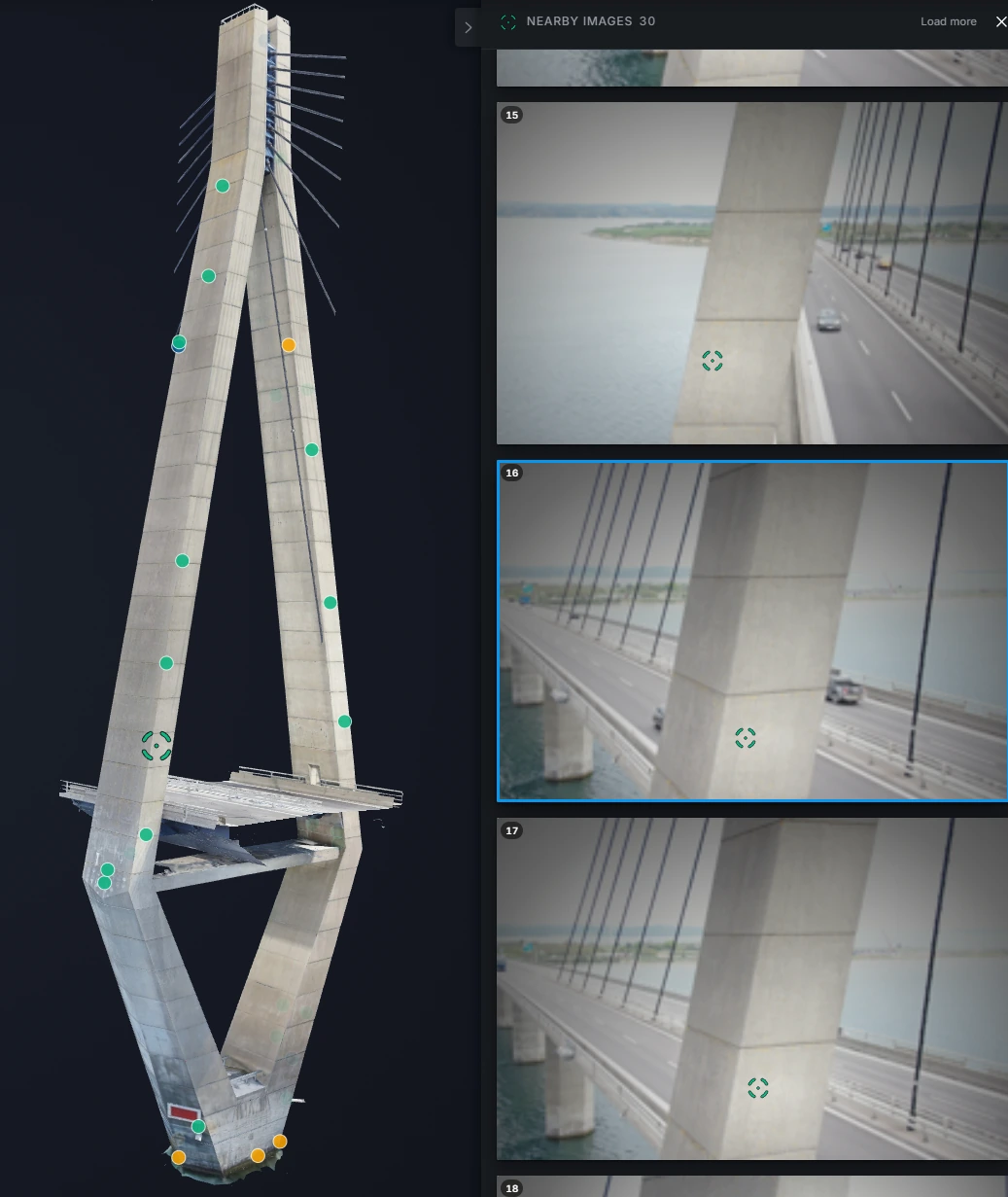
Drone-based inspection removes the access cost entirely and changes the nature of the deliverable. Instead of a report describing defects, you receive a navigable visual record of the entire envelope with every defect located, classified by severity and comparable against the next inspection cycle.
Pain points
What this industry keeps running into
Access cost dominates the budget
Scaffolding, cradles and rope-access teams often cost more than the inspection itself, which pushes surveys out to longer and longer intervals.
People working at height
Every rope-access facade survey is a working-at-height risk event that has to be assessed, permitted and supervised.
A PDF nobody can interrogate
Static reports cannot be re-examined when a defect develops later, and offer no way to compare condition between cycles.
Reactive rather than planned maintenance
Without a condition baseline, maintenance spend is triggered by failures instead of prioritised against measured risk.
The AIN UAE approach
How AIN UAE inspects a building
Full envelope visual capture
High-resolution imagery across the entire facade, including elevations that rope access reaches slowly and cradles cannot reach at all.
Radiometric thermal survey
Thermal imaging reveals moisture ingress, insulation failure and thermal bridging that visual inspection alone cannot detect.
Defect register with severity
Every defect located on the model, classified by type and severity, and prioritised so maintenance spend follows measured risk.
Roof & waterproofing assessment
Membrane condition, ponding and thermal leak detection without anyone walking a fragile or live roof surface.
Deliverables
What you actually receive
Every engagement ends in files your team can open and act on, not a folder of raw imagery.
- ◆ Navigable 3D model of the building envelope
- ◆ Defect register with location, type & severity
- ◆ Radiometric thermal overlays
- ◆ Roof condition assessment
- ◆ Condition comparison between inspection cycles
- ◆ Consultant-ready condition report
Maintenance strategy
From corrective to condition-based
Most FM budgets are still shaped by what failed last quarter. Condition-based maintenance reverses that: inspection data sets the schedule, and the schedule sets the budget.
Plan against evidence
Envelope and roof condition captured on a fixed cadence, so the maintenance plan is built from measured deterioration rather than complaint volume.
Rank by risk
Severity-rated defects across a portfolio let you fund the buildings that need it first, with the data to show why.
Extend asset life
Sealant failure and water ingress caught early are cheap repairs. Left to run, they become structural work.
Fewer site revisits
Remote review of the twin answers most follow-up questions without another access booking or cradle mobilisation.
Defensible reporting
Dated, geo-referenced condition evidence for owners, insurers and auditors, not a written summary.
Consistent standards
The same classification applied on every cycle, so year-on-year comparisons actually mean something.
Measurable outcomes
What FM teams gain
Access-cost and duration comparisons reflect published industry benchmarks for drone versus rope-access and scaffold inspection.
Facade defects captured at inspection resolution without scaffolding, cradles or rope-access teams.
FAQ
Facilities Management · common questions
Far less than the alternatives. There is no scaffold erection, no cradle movement across windows for weeks and no rope teams descending past occupied floors. A typical facade capture takes hours rather than weeks, and occupants are generally unaffected.
The deliverable is a geo-referenced, time-stamped condition record with documented methodology, which is materially more defensible than a photographic report. Acceptance depends on your specific insurer or authority requirement, and AIN UAE formats reports to UAE infrastructure and portfolio reporting standards.
Most UAE portfolios run facade condition surveys annually or biennially, with higher frequency on older buildings, coastal exposure or where a defect is already being monitored. Because drone capture removes the access cost, more frequent inspection becomes economically viable.
Yes. Missions are planned around building operations and flown without shutdown, evacuation or interruption to tenants.
Scope your project in one call
Tell us the asset, the deadline and the deliverable format: we’ll map the mission. GCAA & DCAA licensed. We respond within 24 hours.