
Home Solutions Industries Case Studies Insights About Contact

Solution · Aerial & Structural Inspection

Inspection-grade data.No assumptions.

Façades, roofs, bridges, tunnels and towers: inspected without scaffolding, rope access or shutdowns. Every defect geo-referenced, time-stamped and rated by severity.

Detection

What the survey actually finds

An inspection is only worth the defects it catches. These are the conditions our visual and radiometric thermal capture is specified to detect across building envelopes, industrial plant and civil structures in the UAE.

Insulation failure

Thermal bridging and degraded or missing insulation driving avoidable HVAC load.

Steam & process leaks

Escaping heat on live plant and distribution lines, located without a shutdown.

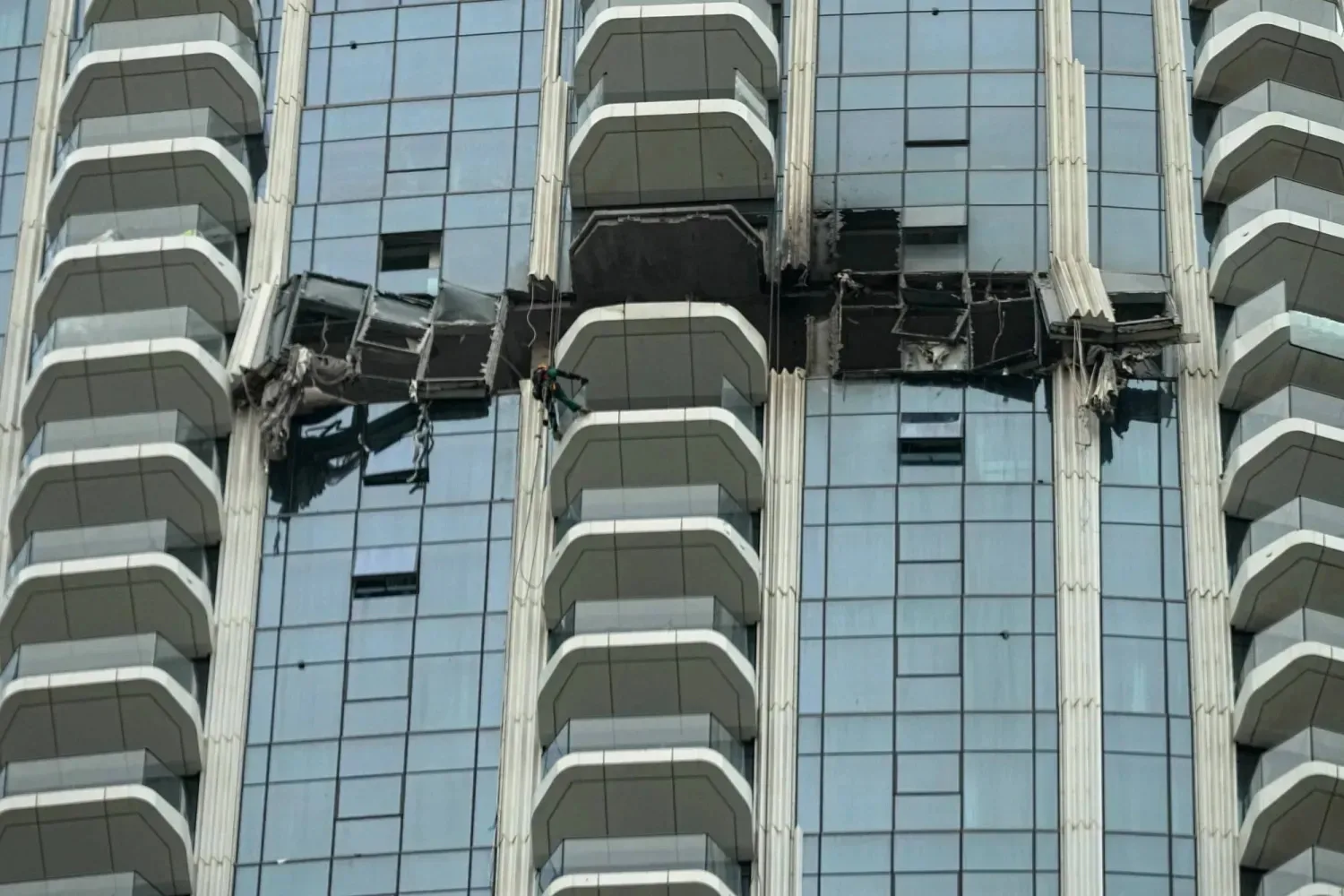
Façade defects

Cracking, spalling, panel movement, sealant failure and cladding deterioration.

Structural anomalies

Deformation, displacement and section loss measured against a dated baseline.

Water ingress

Moisture tracking behind envelopes and under membranes, before staining appears.

Thermal inefficiency

Heat loss and gain across the envelope, quantified rather than estimated.

Surface degradation

Corrosion, coating breakdown and material fatigue mapped across the elevation.

Safety hazards

Loose elements, failed fixings and access risks flagged before they become incidents.

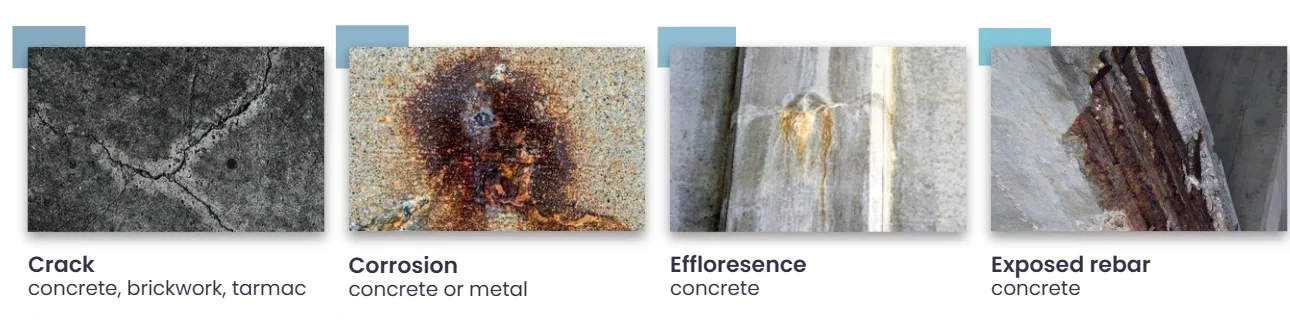
Four structural defect types identified during facade inspection: cracking in concrete, brickwork and tarmac; corrosion on concrete or metal; efflorescence on concrete; and exposed rebar
Facade inspection findings

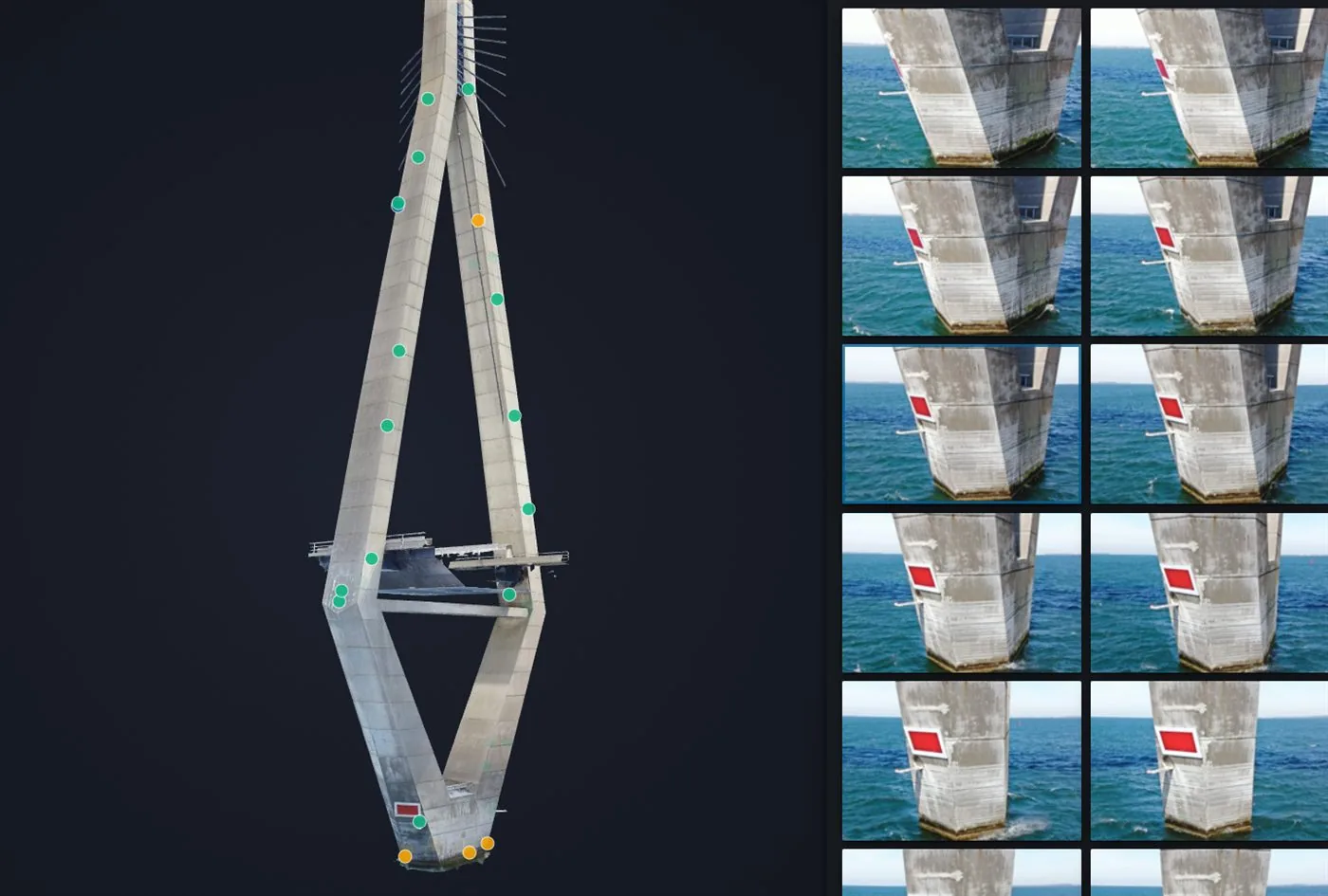
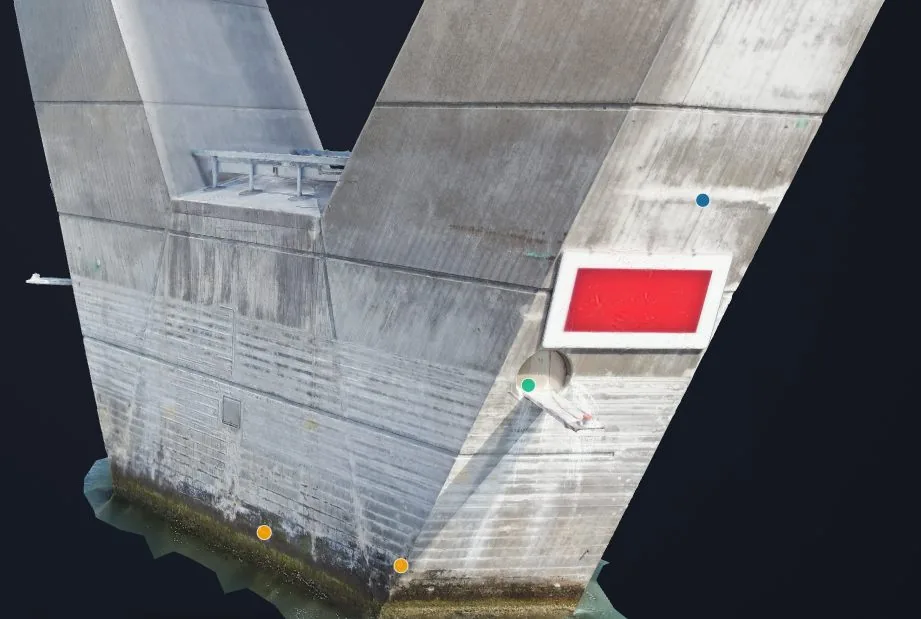
The defect classes a facade and structural survey returns most often. Each is tagged on the model by type and severity, so a repair scope can be written straight from the inspection record.

Deliverables

Reports consultants can submit

Structured drone inspection and condition assessment reports matched to UAE infrastructure standards: customised per project scope, ready to submit without reformatting.

Severity RatingsDefect MapsThermal OverlaysRepair Priorities
01

Mission Planning

Permits, risk assessment and flight paths designed around the asset and its constraints.

02

Visual + Thermal Capture

High-resolution RGB and radiometric thermal passes across the full structure.

03

AI-Assisted Analysis

Defect detection, classification and severity scoring: verified by engineers.

04

Report + Platform

Consultant-ready report plus a navigable 3D inspection record your team can interrogate.

Predictive asset management

Find the issue before it finds you

Every defect on an asset exists before anyone reports it. The only variable is whether you find it while it is still a line item in a maintenance budget, or after it has become a failure, a closure or a claim.

Reactive & corrective

You find out when it breaks

Work is triggered by failure. The budget is set by whatever went wrong this quarter, emergency callouts price at a premium, and the asset loses service life in every cycle it spends degraded.

Predictive & condition-based

You find out while it is cheap

Scheduled visual and thermal capture tracks condition against a dated baseline. Deterioration reads as a trend rather than an event, so maintenance is planned into a budget cycle instead of forced into an emergency one.

Detect problems early. Plan maintenance intelligently. Prevent failures before they occur.

Scope

What we inspect

Façades & Cladding

Crack detection, panel movement, sealant failure and thermal bridging on high-rise envelopes.

Roofs & Waterproofing

Membrane condition, ponding, thermal leak detection: no walking fragile surfaces.

Bridges & Tunnels

Deck, soffit and bearing inspection with deformation monitoring over time.

Towers & Masts

Telecom and utility structures inspected live: zero downtime, zero climbers.

Thermal Anomaly Mapping

Radiometric imaging reveals moisture, electrical hotspots and insulation failure invisible to the eye.

Mechanical Systems

Ground-based and aerial condition assessment for plant, HVAC and utility corridors.

The Challenge

Weeks of scaffolding for a PDF

Manual inspection takes weeks, workers go up scaffolding into real risk, and at the end you get a PDF nobody can interrogate when something fails six months later.

The Solution

Days, not months · off-site record

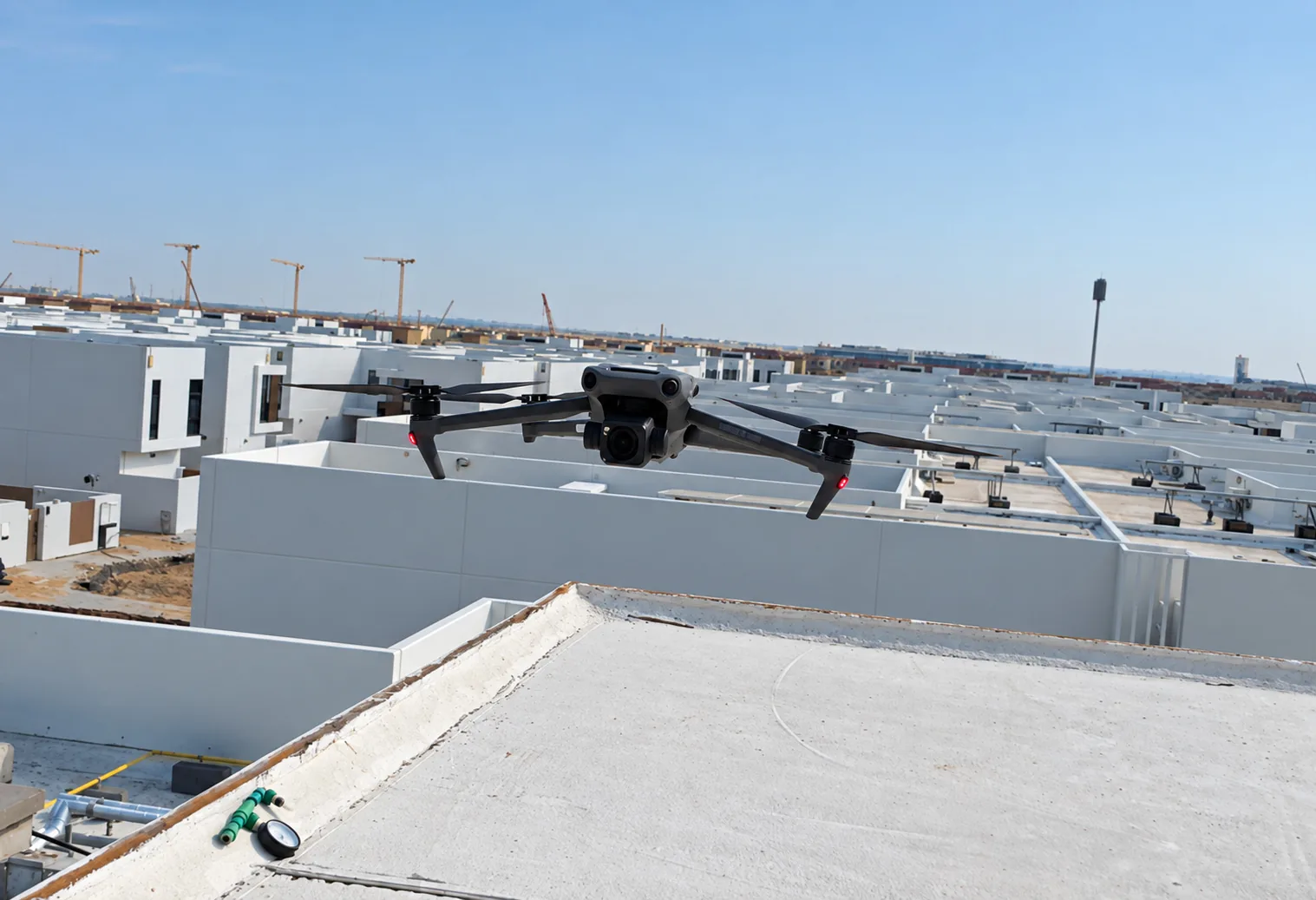
GCAA-approved drone operations run by our own pilots cut the timeline from months to days and produce a geo-referenced record that holds up in an audit, a warranty dispute or an insurance claim.

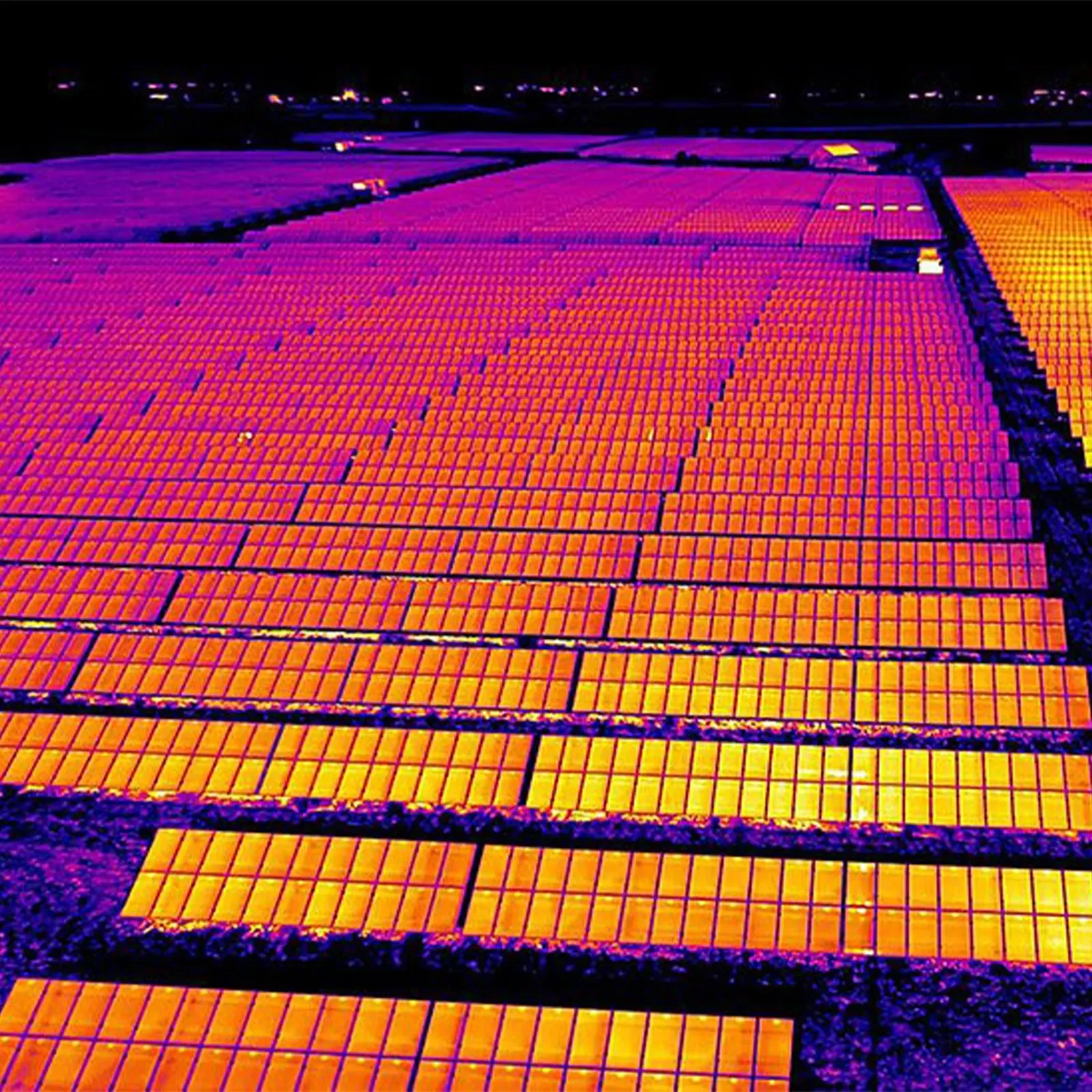
Radiometric thermal image of a building elevation revealing heat-loss and moisture anomalies invisible to the eye
Thermal survey

Radiometric capture exposes moisture ingress, insulation failure and thermal bridging that a visual inspection alone cannot detect.

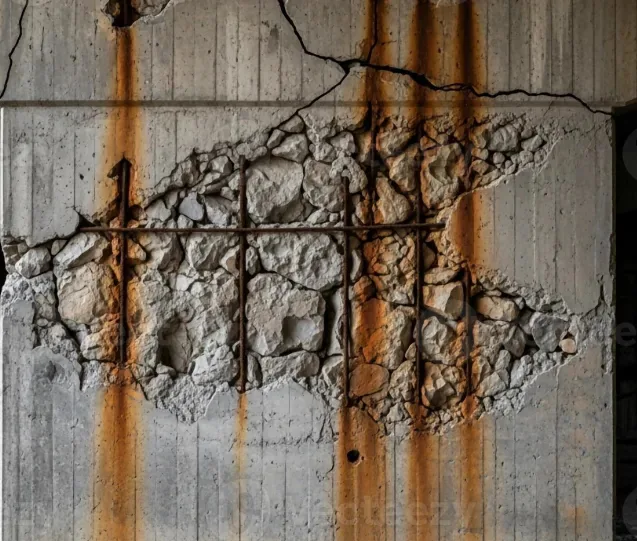
Close-up of spalled concrete with exposed, corroding rebar on a structural element
Defect close-up

Concrete spalling and active rebar corrosion, captured at inspection resolution without rope access or scaffolding.

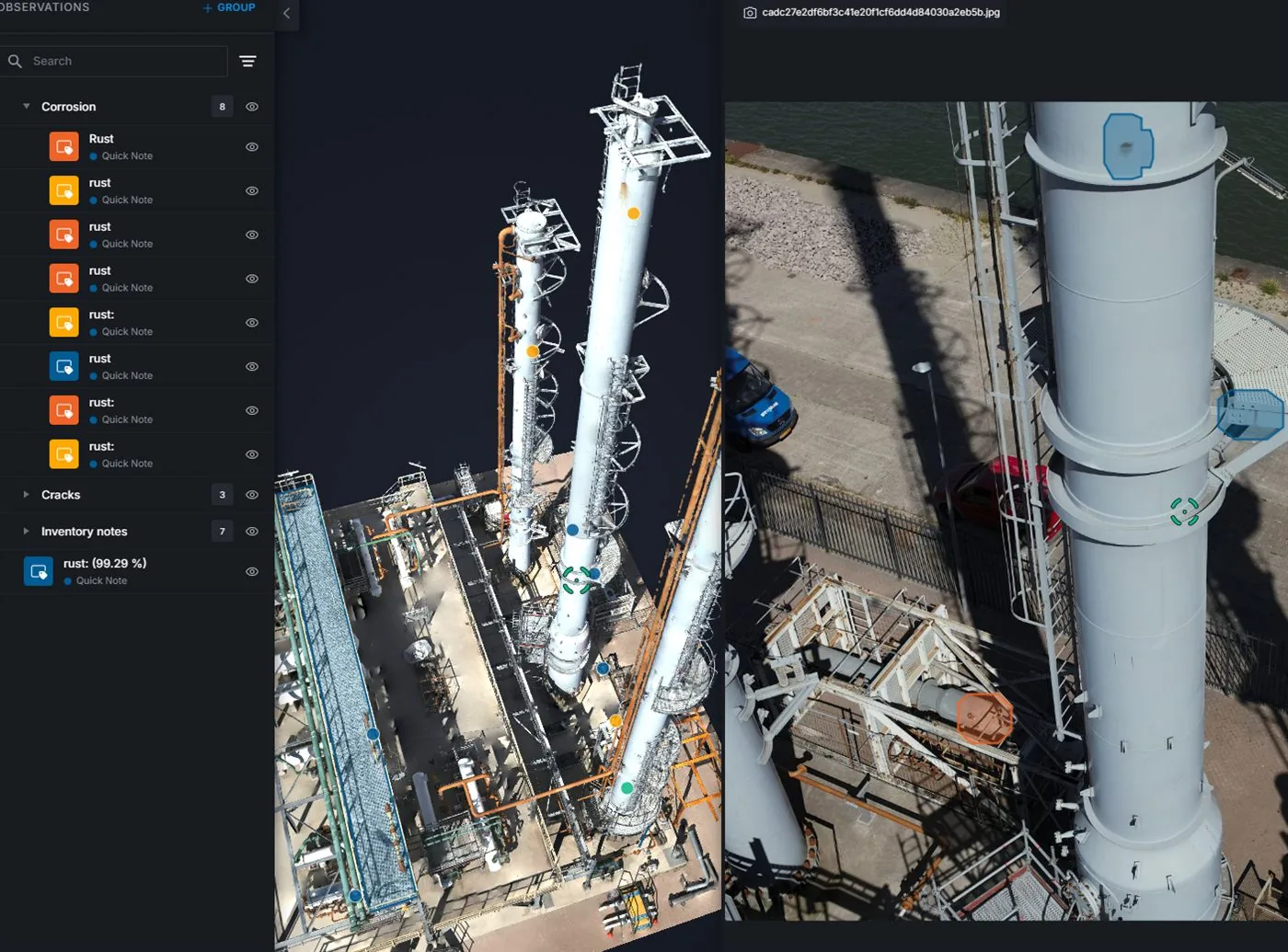
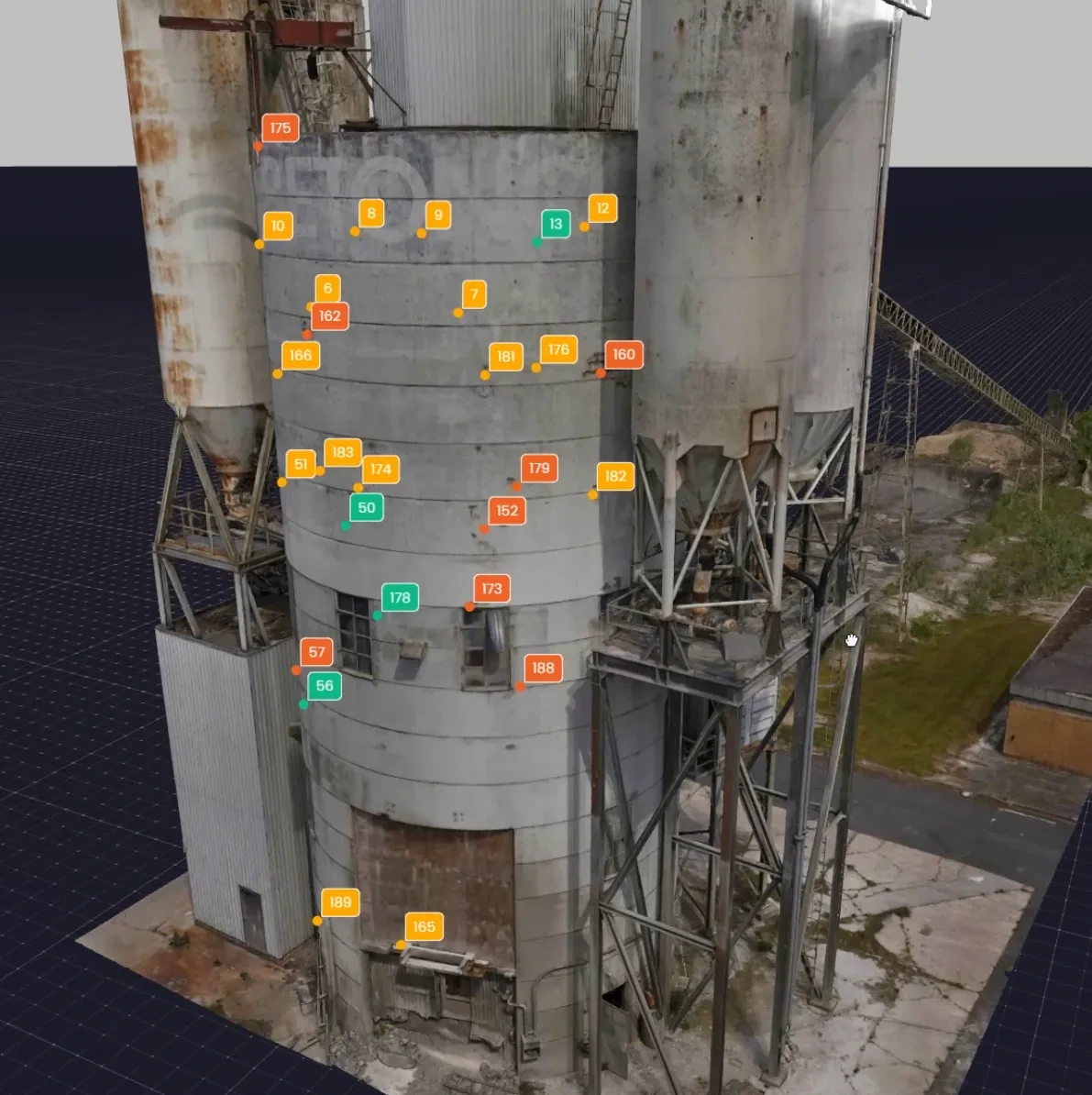
3D model of an industrial silo structure with numbered defect tags marking inspection points across the surface
Defect tracking

Every defect numbered and geo-located on the model, so the same point can be re-inspected and compared next cycle.

Repeatability

Two inspectors, two reports

A visual inspection is a judgement made by one person, on one day, under one set of conditions. Send a different inspector and the defect list changes: different thresholds, different notes, different things missed.

A digital survey removes the variance from the capture without removing the engineer from the decision. The same elevation is recorded the same way on every cycle, defects are classified against a fixed severity scale, and every finding carries the image and coordinate it came from.

What you get is an auditable inspection trail: standardised, repeatable, and defensible when a warranty claim, insurance assessment or regulator asks how a condition rating was reached.

FAQ

Common questions

Reactive maintenance responds after a failure has happened; predictive, condition-based maintenance uses scheduled inspection data to catch deterioration while it is still minor. Drone survey makes the predictive model affordable, because capturing an asset repeatedly no longer requires scaffolding, rope access or a shutdown each time.

Visual and radiometric thermal capture detects insulation failure, steam and process leaks, façade cracking and spalling, structural deformation, water ingress behind envelopes, thermal inefficiency, surface corrosion and coating breakdown, and physical safety hazards such as loose elements and failed fixings.

No. Missions are planned around live operations, including oil & gas and utility assets, with zero shutdown in most cases, which removes the downtime cost that makes manual inspection expensive.

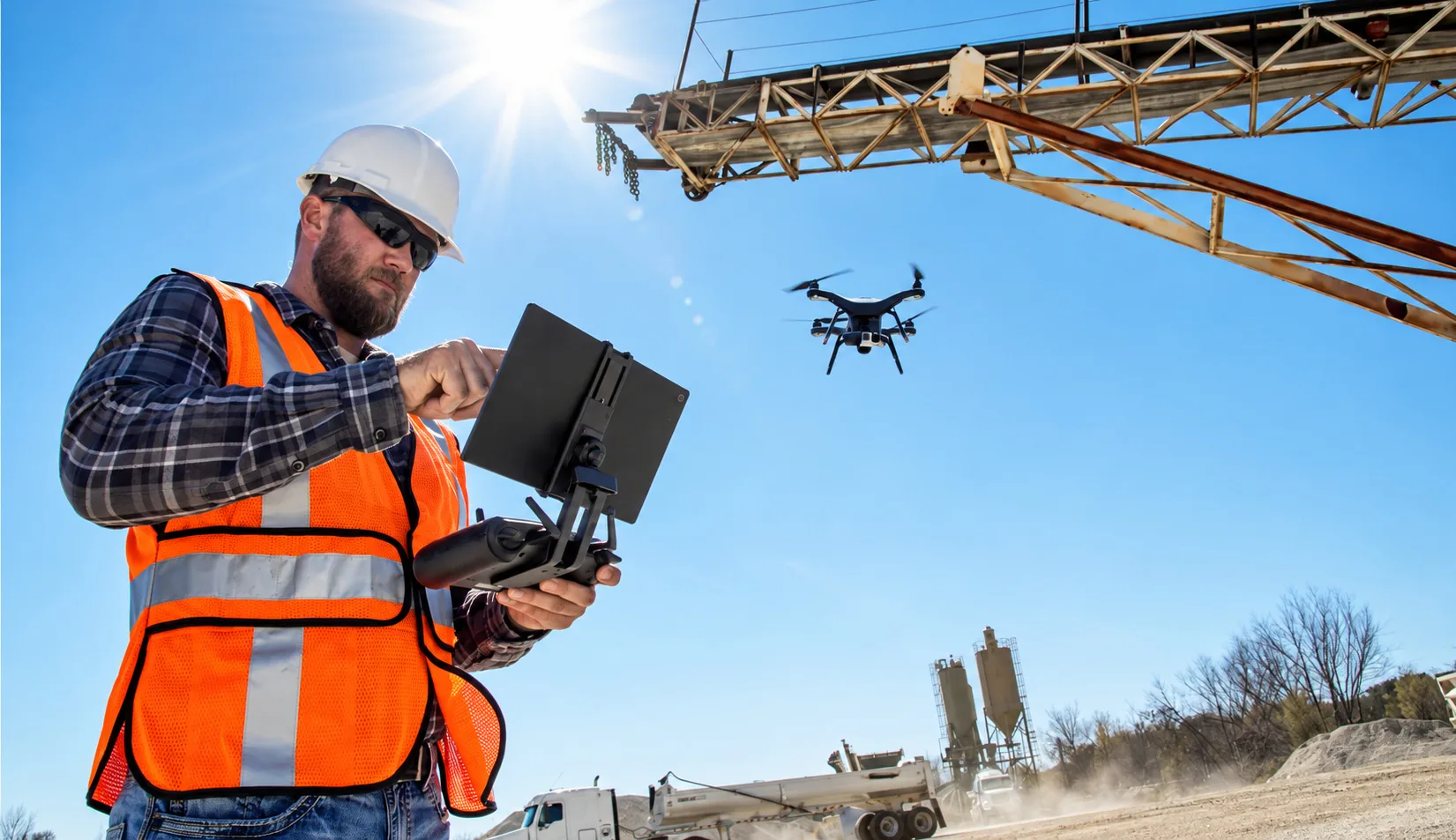
Our own GCAA and DCAA certified pilots. AIN UAE never subcontracts capture, which is how data quality is guaranteed end to end from flight planning through to the final condition report.

Inspection-ready data is typically available the same day it is captured; full structured condition reports, formatted to UAE infrastructure and portfolio reporting standards, follow within days depending on scope.

Ready to see your asset in data?

The only reason to postpone an inspection is believing the problem can wait. Every hidden defect eventually becomes a maintenance priority; what changes is the cost of finding it late.

Book a free consultation. GCAA & DCAA licensed. We respond within 24 hours.