


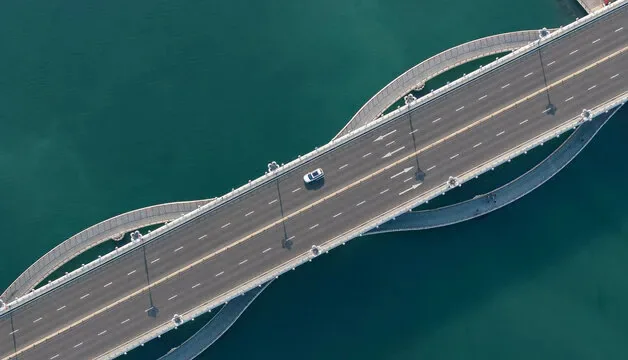
Industry · Civil Infrastructure
Bridge & infrastructure drone inspection in the UAE
Bridge, tunnel and civil asset inspection with condition records and comparisons across capture dates. Access, traffic-management needs and reporting requirements are agreed for the site; drone capture may reduce the need for lane closures.
The infrastructure inspection problem
Civil infrastructure fails slowly and then suddenly. Between scheduled inspections, defects develop invisibly, and the inspection record itself is usually a series of disconnected reports that cannot be compared to each other. The result is an asset owner who knows a defect exists but cannot say how fast it is progressing.
AIN UAE builds a versioned structural record. Each capture is geo-referenced to the same model, so a crack recorded this year sits in exactly the same coordinate as last year, which makes deformation and deterioration measurable rather than anecdotal.
Pain points
Access and condition-monitoring challenges
Defects develop silently between cycles
Annual or biennial inspection leaves long blind periods in which structural condition changes without any record.
Lane closures and traffic management
Conventional bridge inspection requires closures, under-bridge units and traffic management, which carry cost and public disruption.
Reports that cannot be compared
Inspection findings recorded in unlinked documents make it impossible to measure the rate at which a defect is progressing.
Confined and high-risk access
Soffits, bearings, tunnel crowns and tall structures put inspectors in genuinely hazardous positions.
The AIN UAE approach
How AIN UAE inspects civil assets
Structural condition capture
Deck, soffit, pier, bearing and abutment imagery at resolution sufficient for crack identification and classification.
Deformation monitoring
Repeat capture geo-referenced to a common model, so structural movement is measured between cycles rather than estimated.
Defect history tracking
Every defect carries a location and a timeline, showing how it has developed across successive inspections.
Digital structural record
A permanent, navigable model of the asset that supports capital planning, audit and regulatory reporting.
Deliverables
Infrastructure inspection records and deliverables
Every engagement ends in files your team can open and act on, not a folder of raw imagery.
- ◆ Geo-referenced structural 3D model
- ◆ Defect register with severity classification
- ◆ Deformation comparison between capture cycles
- ◆ Thermal overlays where specified
- ◆ Condition timeline per defect
- ◆ Consultant-ready inspection report
Measurable outcomes
What asset owners gain
Comparisons reflect published benchmarks for drone-based versus conventional structural inspection.
Go deeper
Infrastructure inspection capabilities and project evidence
FAQ
Civil Infrastructure · common questions
Drone capture may reduce lane closures or access-equipment needs, but this is not guaranteed. Traffic management, safe separation and access restrictions are assessed for each site and agreed before capture.
Each inspection is geo-referenced to a common structural model, so a defect recorded in one cycle occupies the same coordinate in the next. That allows genuine measurement of crack propagation, spalling progression and structural movement rather than subjective comparison of photographs.
Yes. Tunnel crowns, soffits and confined structures are captured without placing inspectors in hazardous positions, using flight planning designed for GPS-denied and restricted environments.
Yes. Deliverables are time-stamped, geo-referenced and issued with documented methodology, formatted for UAE infrastructure reporting standards and suitable for audit and capital planning purposes.
Structure inspection
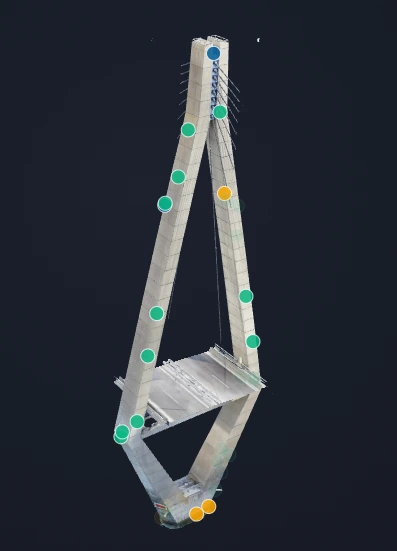
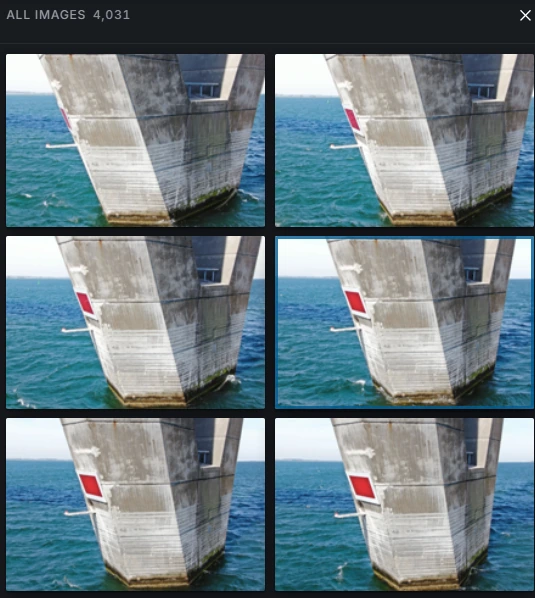
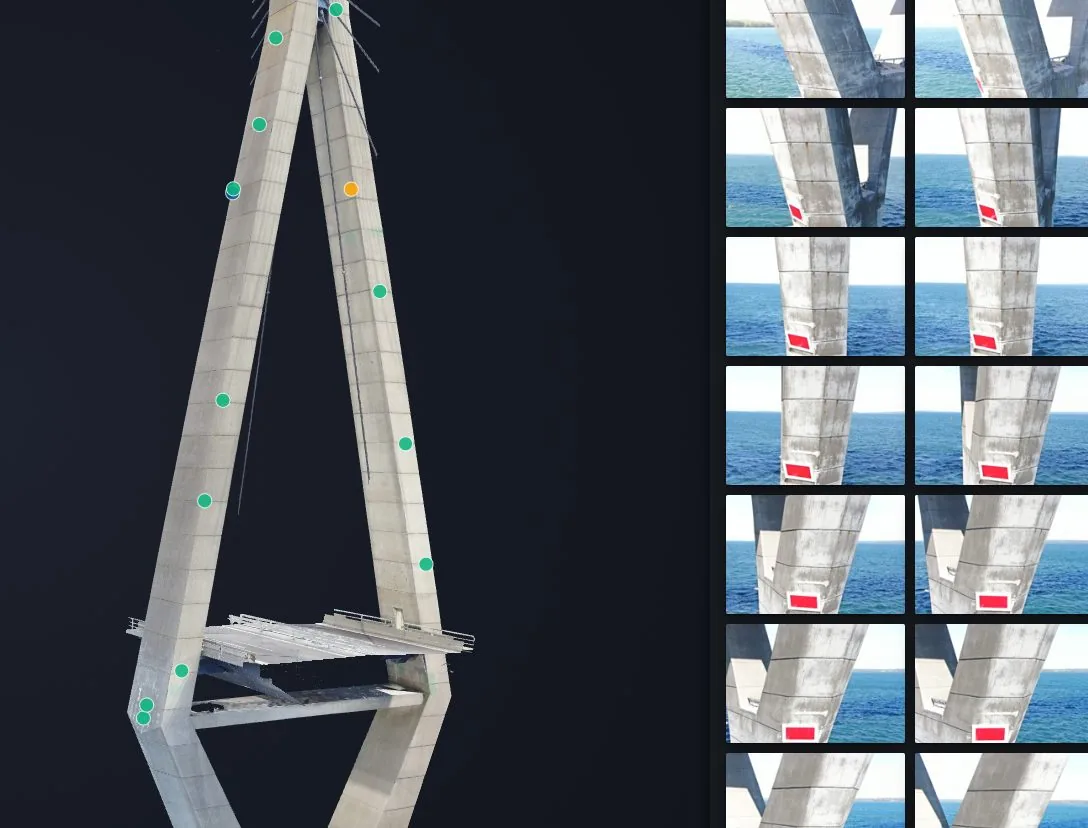
How a structure is documented
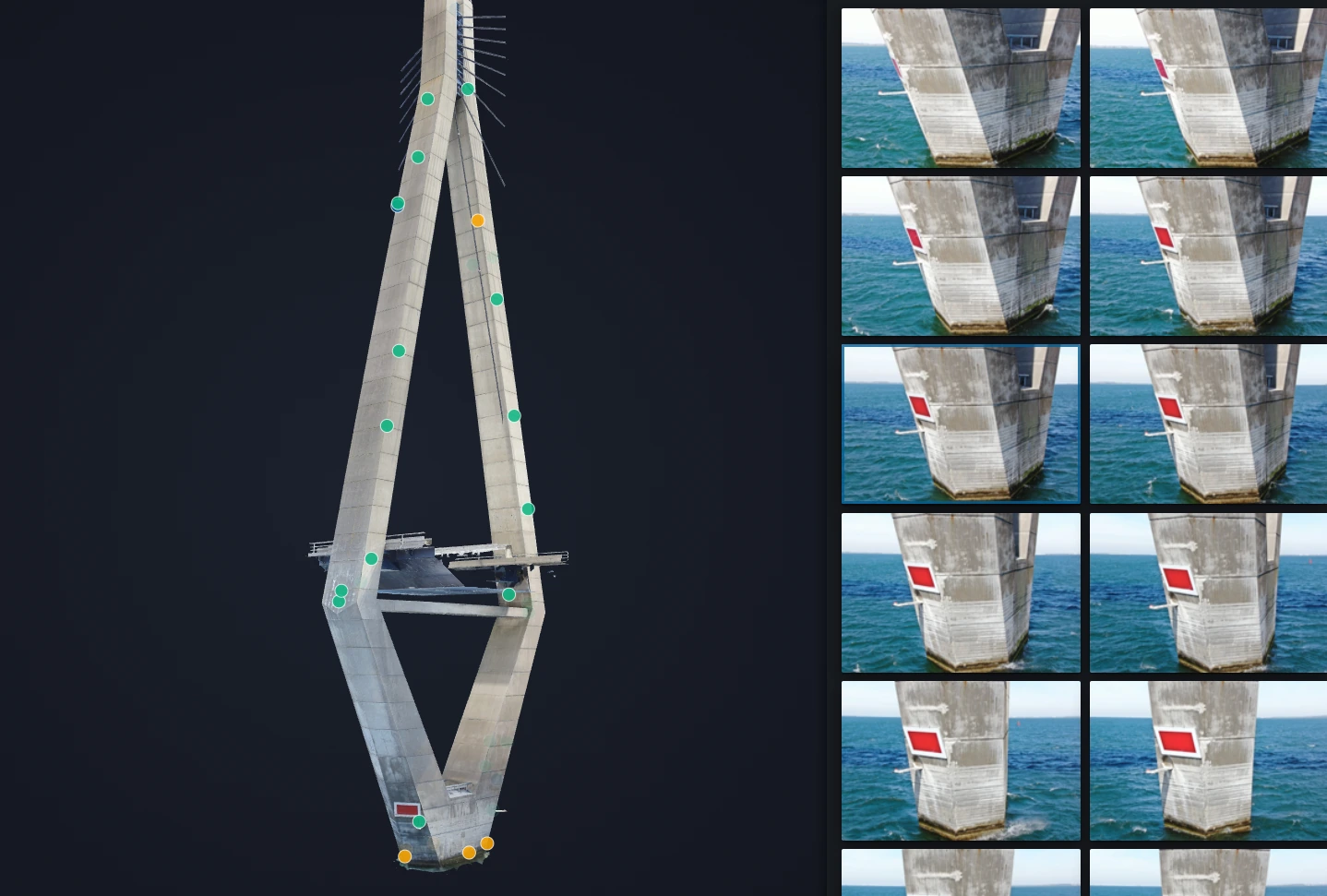
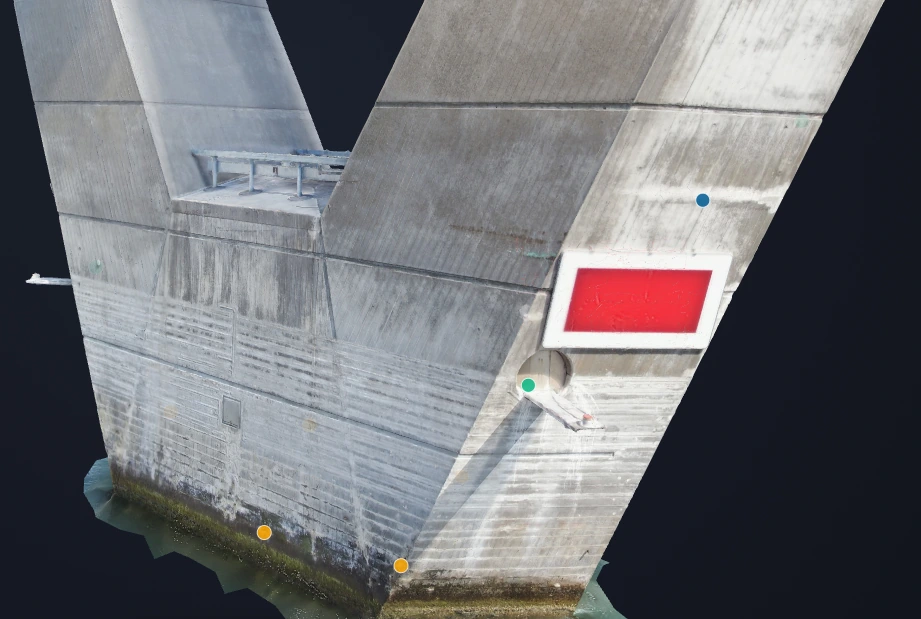
Findings are tagged on the model and linked back to the frame they came from, so any marker can be re-opened and checked against the original capture.
Discuss an infrastructure inspection scope
Tell us the asset, the deadline and the deliverable format: we’ll map the mission. GCAA & DCAA licensed. We respond within 24 hours.