

Industrial · 6 min read
ADNOC put a robot inside a gas plant.Here's why that matters if you don't have one.
Most UAE operators will never justify a bespoke robotics programme. The accessible version of the same shift, remote aerial inspection instead of manual access, is available to almost anyone.
Published 27 July 2026 · AIN UAE
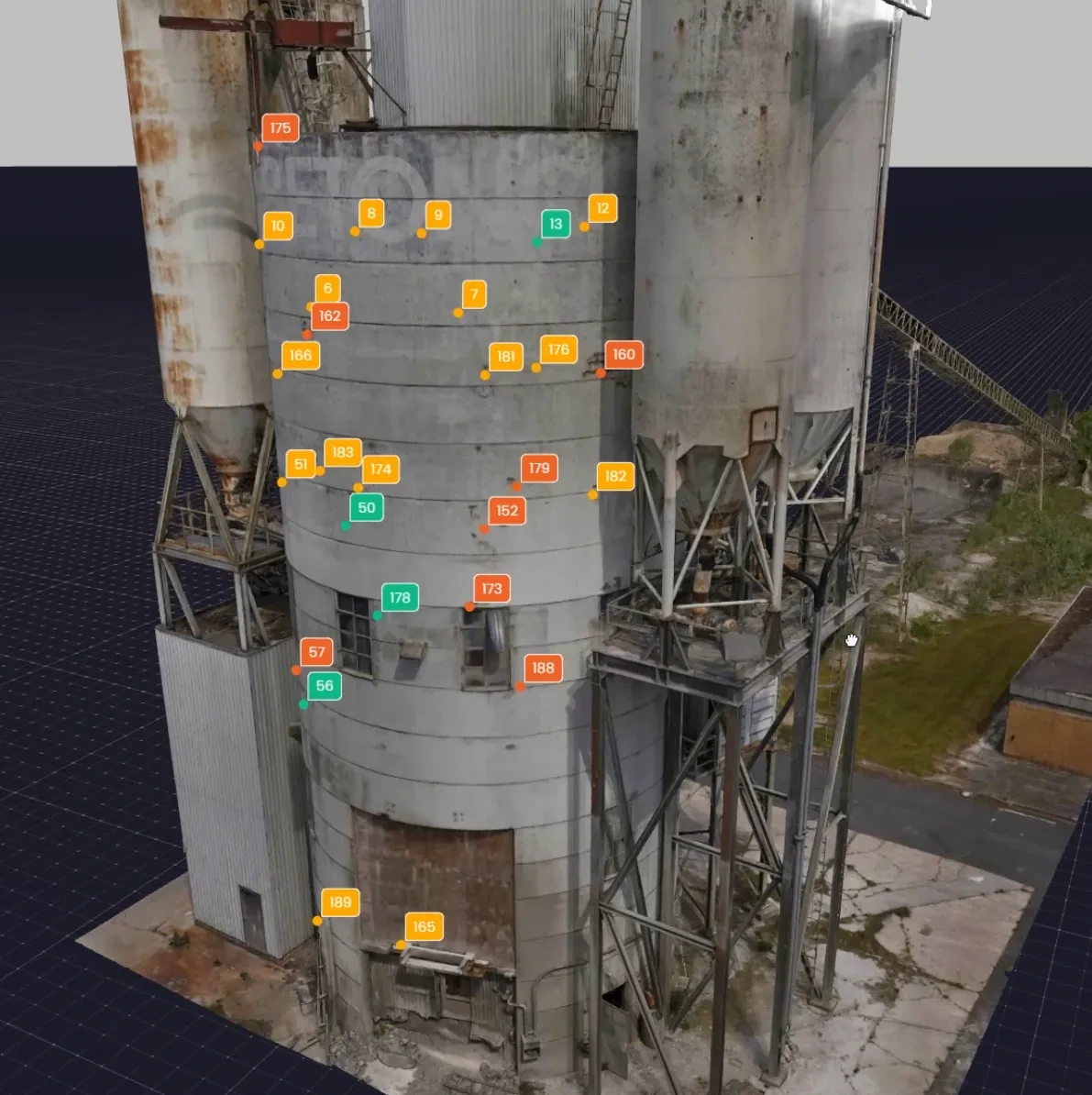
Drone inspection covers tanks, flare stacks, pipework and elevated plant the way ADNOC's robot covers ground-level equipment, taking the person out of the hazard.
ADNOC has deployed an autonomous heavy-duty inspection robot at its Taweelah Gas Compression Plant, part of a wider push into AI, robotics and automated safety systems across its operations. It's also co-developing a next-generation operator robot, one that can lift equipment, work valves and carry out maintenance tasks in high-risk environments, through the ARGOS Joint Industry Project alongside Equinor, Petrobras, TotalEnergies, Saft and Taurob. The timing lines up with a wider seasonal safety push too: the seventh National Fuel Station Safety Campaign, covering more than 800 stations across the UAE and running through 31 August 2026, is squarely aimed at the risks that come with summer heat.
Put together, these point to something bigger than one company's tech roadmap. The underlying idea, that sending people into high-risk industrial environments to gather inspection data is the riskier, lower-visibility option, is becoming mainstream thinking across the sector, not just at ADNOC's scale.
What ADNOC actually deployed
The robot at Taweelah handles heavy-duty inspection tasks inside an active gas compression facility, cutting down on the need for people to enter high pressure, high temperature or confined spaces. ARGOS goes further, aiming to build a robot that can actively work valves and carry out maintenance, not just look. It's a multi-year, multi-company investment most operators simply can't replicate. But the direction it points is available to almost anyone.
A bigger idea than one robot
The industry's own framing of the problem is consistent whether you're a supermajor or a mid-size operator: even small undetected faults in construction, logistics, oil and gas or manufacturing can escalate into shutdowns or serious safety incidents. The traditional way of catching those faults, a technician on a ladder, in a confined space, or on scaffolding, working through a checklist, is exactly the exposure that robotics and remote-sensing programmes are trying to cut.
Most operators in the UAE will never justify a bespoke robotics R&D programme. What they can do is take the more accessible version of the same shift: remote, aerial and sensor-based inspection instead of routine manual access to elevated, confined or high-risk areas. Drone-based inspection covers tanks, flare stacks, pipework, structural steel and elevated plant much the way ADNOC's robot covers ground-level compression equipment, by taking the person out of the immediate hazard while producing a more complete, better-documented record than a manual walk-through usually gives you.
Why summer makes the case stronger
The fuel station safety campaign is explicitly framed around summer heat risk, and that's a good reminder that a large share of industrial incidents and near-misses cluster around exactly the conditions the UAE is in right now: extreme heat, higher equipment stress, and less tolerance for the kind of prolonged manual access that facade, tank and structural inspections usually require. Aerial inspection removes the exposure question entirely for these jobs. Nobody's standing on hot steel or scaffolding in peak summer conditions.
Where to start without a robotics budget
- Identify which routine inspection tasks currently require people in confined, elevated or high-temperature areas, and work out which ones could switch to aerial or remote data capture.
- Prioritise summer inspections first. The safety case is strongest exactly when manual access is riskiest.
- Build a structured, repeatable inspection record (thermal, visual, structural) rather than a one-off assessment, so trends show up over time, mirroring the continuous-monitoring logic behind ADNOC's own robotics investment.
- Treat the inspection record itself as a safety and compliance asset for facilities and FM teams: auditable proof that hazardous areas are being watched without repeated manual exposure.
About AIN UAE
GCAA & DCAA licensed drone data and digital twin company
AIN UAE is a GCAA and DCAA licensed drone inspection company based in Dubai, working with oil and gas operators, industrial facilities and FM teams across the UAE and GCC to replace manual access to elevated, confined and high-risk areas with aerial data capture.
Talk through your project